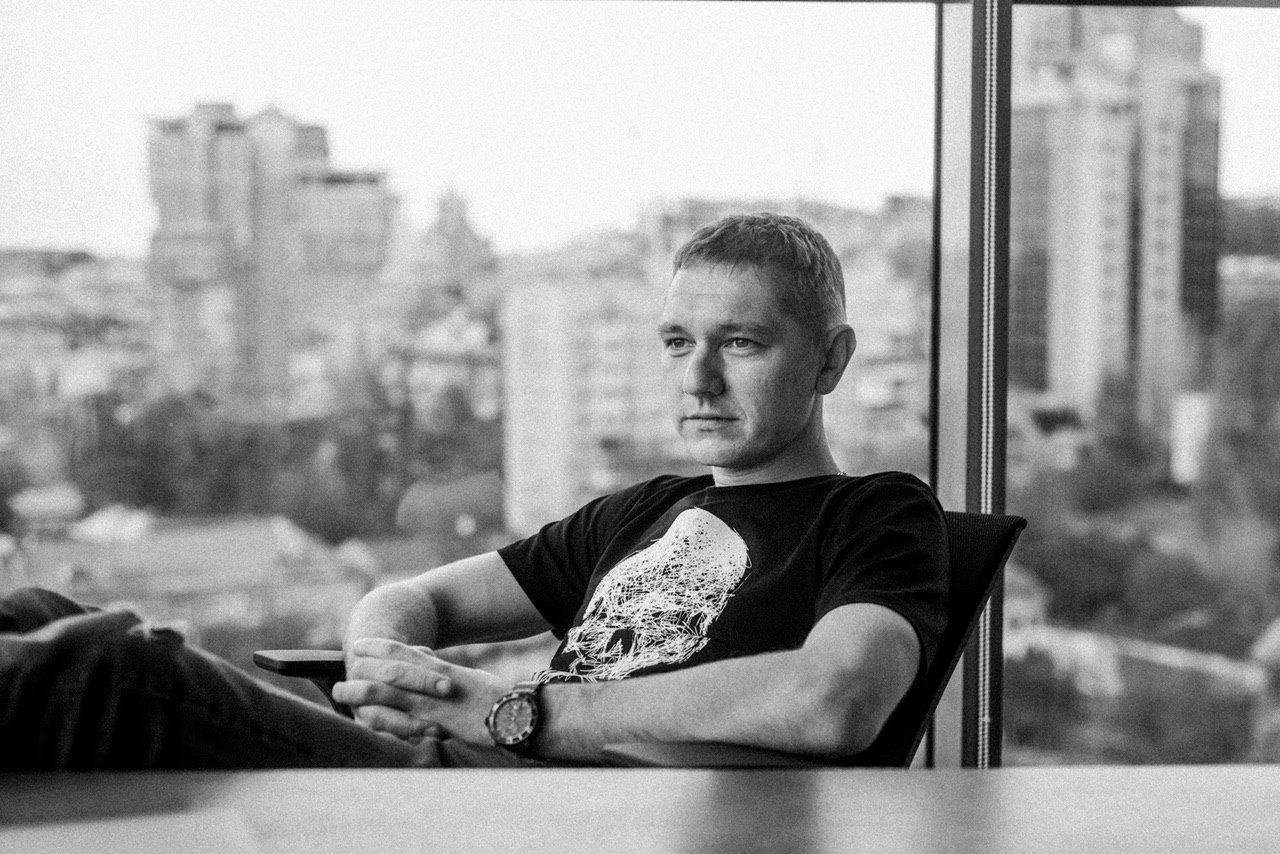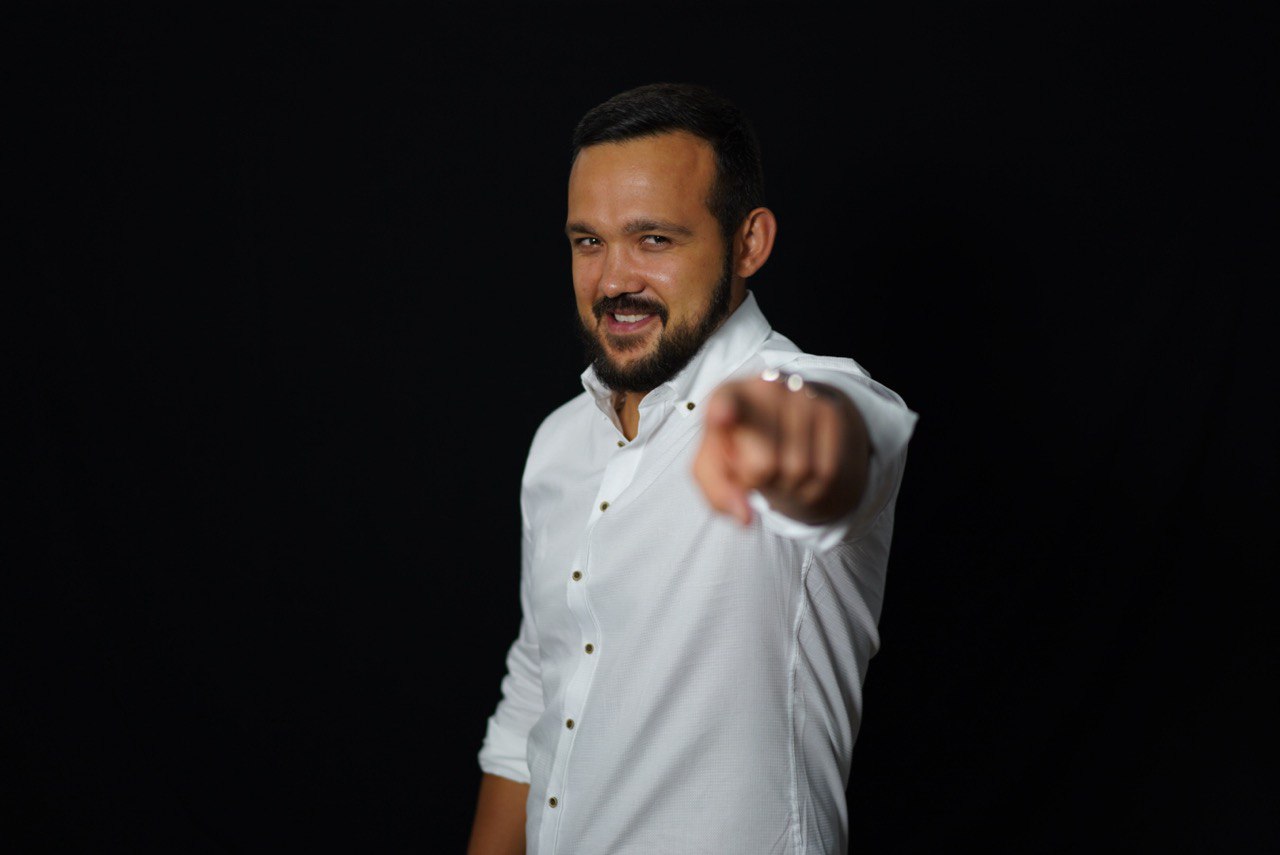
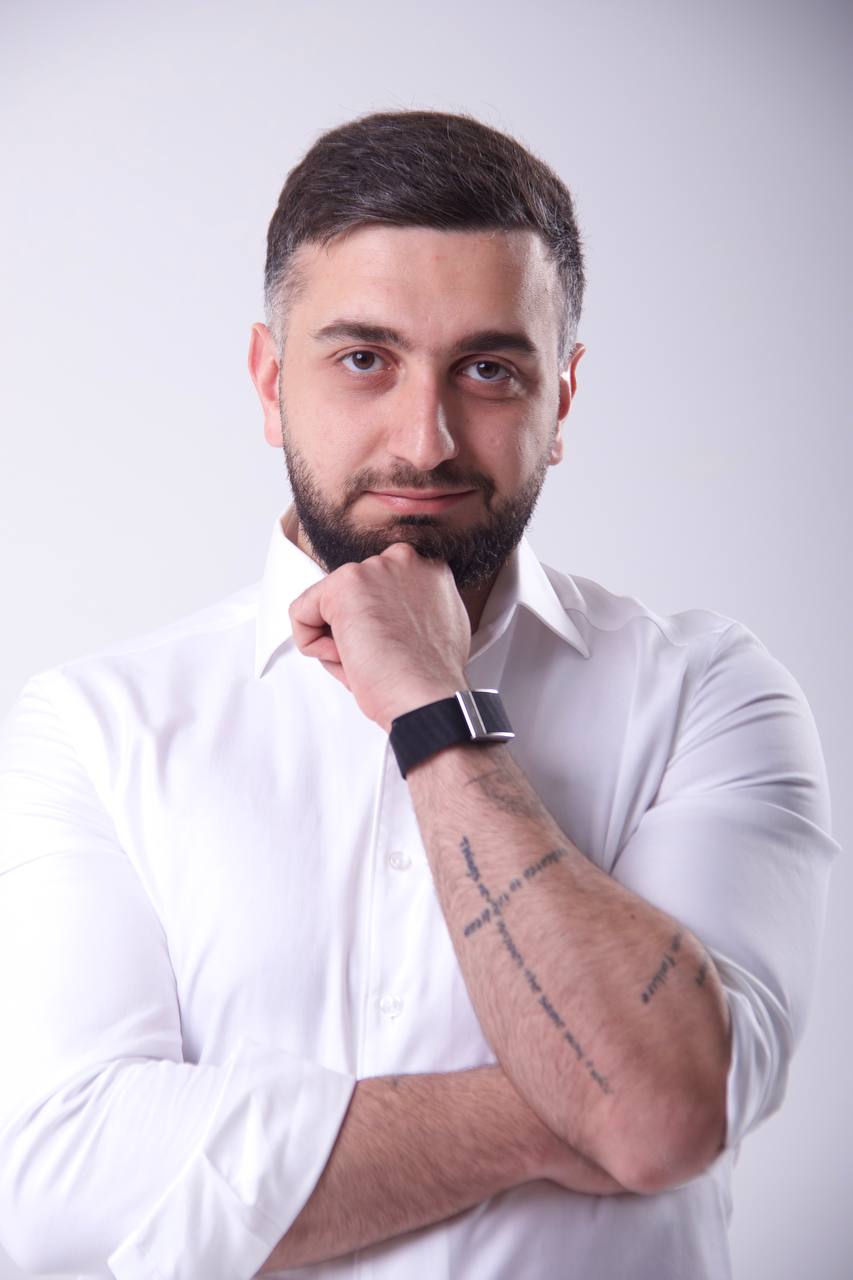
Arman Mamyan: In a World Built for Distraction, Discipline Becomes Power
Arman Mamyan - Lead Web3 Software Engineer, Co-Founder of Coverant, Integration Lead of Animoca Brands.
THE REVELATION
As AI makes creation easier and digital systems become better at capturing attention, human advantage shifts in the opposite direction: toward judgment, adaptability, health and self-control. Technology can amplify ability, but it cannot decide what deserves attention or build discipline on someone's behalf. The rarer skill may therefore become the ability to focus, learn continuously and keep acting when convenience makes distraction effortless. In an automated world, discipline is not nostalgia for a harder life. It becomes a form of personal leverage.
1. People usually introduce themselves through titles. How would you describe yourself without mentioning work?
The short answer would probably be: a man on many missions. Or maybe a man of imagination.
Why? Because throughout my life I’ve carried a lot of ideas that I want to bring into this world. Some of them don’t even require visibility, appreciation, or applause. They’re simply ideas that matter to me personally. Things I want to build because they feel meaningful to me, not because someone else will notice them.
2. What decision changed your life more than you realized at the time?
There were a couple of decisions, but the biggest one was taking my first real leap of faith professionally – going completely rogue and starting to do my own thing.
At the time, it was terrifying. The financial instability, the uncertainty, the constant doubts – all of that was heavy. I didn’t know whether I would achieve anything at all.
Usually I’m very confident that I can do whatever it takes to get where I want to be, but this was different. This was a real risk. And looking back, that risk changed me completely.
It built my self-confidence in a way nothing else could. It taught me that sometimes you need to move before you feel ready, and that one decision stabilized many things internally for me.
3. Looking back – was your path built by strategy or by accidents you learned to use?
There’s always strategy involved. I’m someone who likes to think years ahead and build a clear direction for my moves.
But the funny thing is – reality never follows the exact strategy you planned on paper.
There are always accidents, unexpected problems, difficult moments, random opportunities, and things you never saw coming. So I think success comes from having a strategy while also understanding that the final result will be shaped by accidents you learn how to use.
You need both: vision and adaptability.
4. What version of success impressed you at 20 that no longer impresses you today?
This is actually a hard question for me, because the definition of success I had since childhood hasn’t changed that much.
I realized pretty early that what I truly wanted wasn’t status, attention, or external validation. It was control over my own time and my own life.
That still remains my definition of success today.
I think people naturally get used to things very quickly. We stop appreciating what we already have, and I constantly try to remind myself not to fall into that trap.
So honestly, there isn’t a version of success that impressed me at 20 and no longer impresses me now. The core thing I’ve been chasing has always been freedom – the ability to control my time, my direction, and the things I choose to build.
5. What is something ambitious people often get completely wrong?
A few years ago I would’ve answered this very differently, but today I think one of the biggest mistakes ambitious people make is building huge things without truly understanding whether the market actually needs them.
Especially now with AI.
A lot of people are building products because they personally have a problem and assume it’s a universal problem. They spend enormous amounts of money and energy trying to push ideas into existence without stepping back and asking whether the narrative itself makes sense.
AI made building easier. It did not make understanding people easier.
And honestly, many incredibly ambitious people would probably become successful if they simply took one step back, looked at the bigger picture, and validated the problem before obsessing over the product.
The second thing ambition gets wrong is that sometimes ambition blinds you.
That blindness can be powerful because it helps you ignore fear and keep going when everyone thinks you’re crazy. But it can also become dangerous if you stop listening completely.
You need enough self-awareness to recognize the difference between random negativity and valuable criticism. If smart people give you constructive feedback, you must be capable of stepping back and asking yourself whether they’re right.
Otherwise ambition becomes ego – and ego destroys people.
6. Have you ever had a moment where everything looked successful from the outside – but felt wrong internally?
Absolutely. More than once.
Even today I still battle with impostor syndrome and perfectionism. From the outside everything can look great, but internally you may still feel like you’re fighting yourself every single day.
And that’s the thing people don’t understand: the outside picture is never equal to the internal reality.
I’ve seen startups that looked incredible publicly – companies people admired internationally – while internally everything was chaos. Toxic management, constant stress, endless fights, emotional exhaustion. I experienced that myself years ago.
From the outside it looked like success. Internally it felt like hell.
And from the entrepreneurial side, it gets even more personal.
When you chase something bigger than yourself, you will have lonely days. Painful days. Days where you come home exhausted, sit on the floor, and genuinely question everything.
You lose people along the way. Some friends stop understanding you. Some think you’re becoming obsessed or crazy. Others try to hold you back – sometimes out of love, sometimes out of fear, sometimes because your growth reminds them of their own limitations.
And eventually you realize there’s a price for ambition.
Nobody sees those moments publicly. They only see the polished version.
But internally there are days filled with doubt, exhaustion, pressure, loneliness, and responsibility. That’s the hidden side of building something meaningful.
7. What belief do you hold today that goes against common opinion?
One belief I have is that work-life balance, at least in the way people romanticize it today, is mostly a myth.
Life is about priorities. Sometimes certain periods demand sacrifice, obsession, or extreme focus. And that’s okay.
Another belief is about discipline. Everybody talks about discipline, but very few people actually live it consistently. Motivation is easy to discuss. Discipline is difficult because it demands action when you don’t feel like acting.
I also think modern culture overprotects people from failure.
Failure became something people try to avoid emotionally at all costs, when in reality failure teaches more than comfort ever will. If something matters deeply to you, you should be willing to fail for it repeatedly.
And honestly, I even disagree with the idea that things like gaming are automatically negative. Video games taught many people creativity, strategic thinking, storytelling, even emotional healing in some cases.
Everything depends on how you use it.
8. What trend feels like hype today but could quietly reshape the next decade?
AI is obviously the biggest one.
Right now there’s a massive hype cycle around it, and eventually that bubble will reshape itself into something more realistic and more demanding.
In the future, simply “prompting AI” won’t be enough. People will need actual understanding – product thinking, systems thinking, technical thinking, communication skills. AI will reward people who know how to direct it properly.
A lot of startups today are building products they barely understand because AI temporarily lowers the barrier to entry. But eventually the costs, complexity, and limitations will catch up.
The companies and people who survive won’t be the ones who blindly used AI. They’ll be the ones who truly understood what they were building.
9. Everyone talks about AI replacing jobs. What human abilities become more valuable because of AI?
Creativity. Taste. Judgment. Adaptability.
AI can generate enormous amounts of content, code, music, art, and ideas. But human beings still decide what actually matters, what feels meaningful, what connects emotionally, and what deserves attention.
The people who become truly valuable won’t be the ones competing against AI. They’ll be the ones who learn how to work with it.
And honestly, if someone is terrified that AI will completely replace them, it usually means they stopped upgrading themselves while technology kept evolving.
The strongest people I know use AI as leverage. They combine multiple skills – product thinking, design, engineering, storytelling, communication – and AI amplifies their abilities instead of replacing them.
AI mainly replaces repetitive work. Predictable work. Mechanical work.
But original thinking, emotional intelligence, vision, leadership, and creativity become even more important.
10. Are we entering an era of deeper human connection – or more sophisticated loneliness?
I think we’re entering both at the same time.
Technology is making connection easier than ever before. You can meet people from anywhere in the world, build communities instantly, and share ideas globally in seconds.
But at the same time, loneliness is becoming more sophisticated.
People are surrounded by constant communication but still feel emotionally disconnected. We are consuming more human interaction digitally while experiencing less of it deeply.
And AI will probably amplify that even further.
People will have AI companions, AI therapists, AI assistants, AI-generated entertainment tailored perfectly to them. Everything will become hyper-personalized. Convenient. Efficient.
But convenience does not automatically create meaning.
So I think the real challenge of the next decade will not be access to connection. It will be preserving authentic human relationships in a world optimized for endless digital stimulation.
11. Which industries do you think will look completely different in 10 years?
Engineering and IT will definitely look completely different.
The barrier to building products is collapsing very quickly because of AI, automation, and new infrastructure layers. The role of engineers will evolve from purely writing code into directing systems, managing complexity, and thinking architecturally.
I also think fintech and banking infrastructure will change dramatically. A lot of traditional systems feel outdated already, and many countries will eventually modernize how money moves, how identity works, and how financial access is structured.
And more broadly, industries directly connected to everyday human life – commerce, transportation, retail, digital services – will all become far more automated and personalized.
12. What future makes you uncomfortable?
The only future that genuinely scares me is the one where I stop trying.
A future where I become comfortable with failure, settle for less than what I’m capable of, and stop building things that could outlive me.
That’s the only future I truly fear.
13. If you had to place a bet on one cultural shift that nobody sees yet – what would it be?
I think we’re slowly moving toward a culture where discipline, health, and self-control become status symbols again.
Not performative productivity. Real discipline.
As technology becomes more addictive, more automated, and more optimized to steal attention, people who can control themselves will become increasingly rare.
The ability to focus deeply, stay physically healthy, think clearly, disconnect from noise, and build long-term consistency will become extremely valuable culturally.
In a world full of distraction, discipline becomes power.
14. What question are you asking yourself lately that you still don’t have an answer to?
What’s next for humanity?
And more personally: how do you build something that lasts?
Not something trendy for one year or two, but something meaningful enough to survive time itself.
That’s a question I think about a lot.
15. Imagine a 25-year-old founder watching this interview. What would you tell them not to chase?
Don’t chase fame.
Don’t chase shortcuts.
And don’t chase big money before understanding how to spend it wisely.
A lot of people dream about suddenly getting millions, but if someone hands you $10 million tomorrow and you’ve never learned discipline, financial management, or responsibility, there’s a very high chance you’ll destroy yourself with it.
Instead, chase understanding.
Learn how to manage people. Learn how to manage yourself. Learn how to manage money before you ever have a lot of it.
Because if you can handle small responsibilities properly, eventually you’ll be able to handle big ones too.
16. What is something you know today that the world will understand only later?
I think people underestimate how much flexibility matters.
The future belongs to people who can adapt quickly, learn continuously, rebuild themselves repeatedly, and move forward despite discomfort.
Most people already know what they need to do deep inside. The difficult part is acting on it consistently.
That’s why discipline matters so much to me.
Everything starts small. You win one minute, then one hour, then one day. And eventually those small victories compound into an entirely different life.
Most dreams don’t die because of failure. They die because people stop trying before they truly begin.
17. What truth became obvious to you only after losing something?
One painful truth I learned is that growth changes relationships.
And it doesn’t automatically mean the people around you are bad people.
Sometimes your friends genuinely love you, but they simply don’t understand why you’re pushing yourself so hard. They don’t understand why you’re sacrificing comfort, nights out, stability, or certain lifestyles to chase something bigger.
And sometimes people unintentionally try to hold you back because your growth makes them uncomfortable.
I used to get angry when I started losing friendships. Over time I understood that it’s part of growth.
It’s better to have one or two people who truly support your evolution than to be surrounded by people who constantly pull you back into versions of yourself you’ve already outgrown.
Loneliness hurts. But slowly becoming smaller to fit other people’s comfort hurts even more.
ABOUT THE AUTHOR
Julia Upiterskaya
Founder of JULS and REVELATIONS
Julia Upiterskaya is a Dubai-based communications entrepreneur, founder of JULS and REVELATIONS, and an international technology moderator and speaker. With more than 10 years of experience across media, communications and events, she has worked with over 100 companies across emerging technology and innovation. Her current focus spans artificial intelligence, wellness and the technologies reshaping how people live, work and build businesses. Through JULS and REVELATIONS, Julia works at the intersection of strategic communications, founder positioning, technology, culture and global communities.