Beyond the Pitch: Fazil Suleymanov on Founders, VC and What Accelerators Are Really For
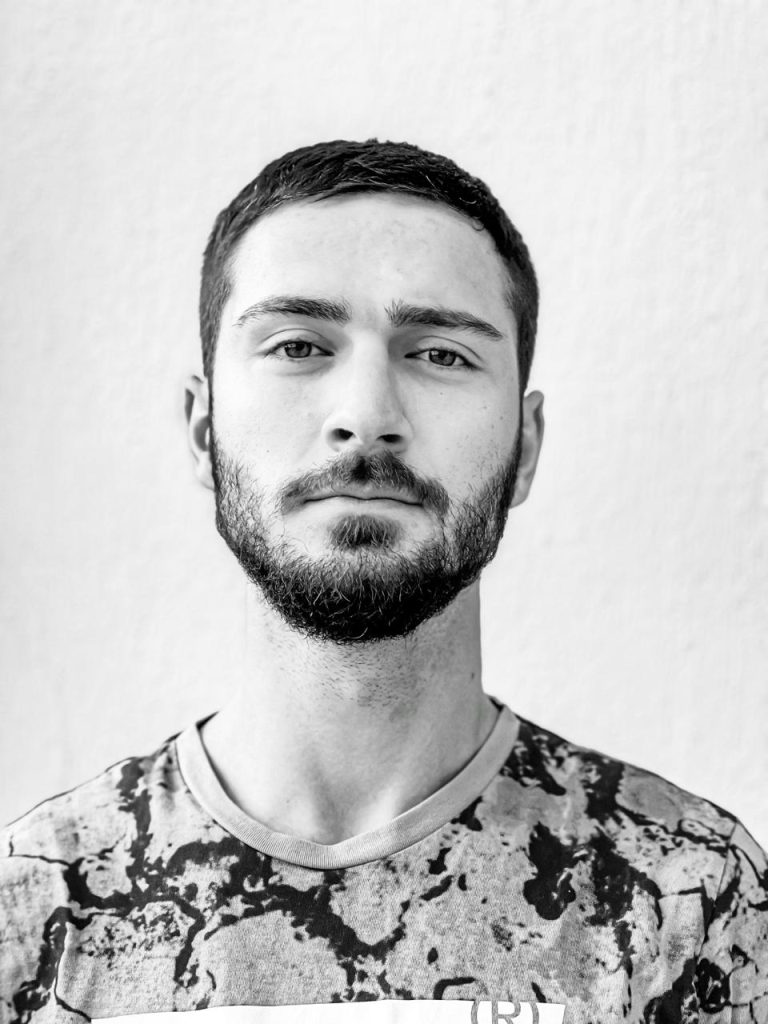
Fazil Suleymanov, Founder & CEO of XFounders, reflects on what truly separates exceptional founders from convincing storytellers, why offline environments reveal what pitch decks cannot, and how AI, capital, and changing founder dynamics are reshaping accelerators and venture capital.
THE REVELATION
The real value of an accelerator may have far less to do with capital, mentors, or investor access than the industry likes to admit. It is about putting founders in an environment where ambition can no longer hide behind a pitch deck. Living and building alongside others exposes how people make decisions under pressure, how they deal with uncertainty, whether they can earn trust, and whether they are still capable of changing their minds. XFounders’ model points to a broader shift in venture: as capital becomes more accessible and AI makes it possible for smaller teams to build larger companies, the scarce asset is increasingly not money but judgment - knowing which people can turn opportunity into something durable. The next generation of accelerators may therefore be judged less by how many introductions they provide and more by whether they can create the conditions in which exceptional founders reveal themselves.
- What should an accelerator actually give a startup?
Compression. A good accelerator should compress a year of learning, decisions, and relationships into a month, so the startup leaves on a materially different trajectory — not just with a better deck. - What happens offline that Zoom can never replicate?
Offline, people stop performing and start revealing how they actually think, work, and behave under pressure. Trust is built in the unscheduled moments—late-night arguments, shared problems, and watching someone keep their word every day. - How quickly can you identify a genuine builder?
I can form a hypothesis in thirty minutes, but I trust it only after watching someone work for a week. A great seller can dominate a room; a real builder changes the reality of the company between two meetings. - What is the biggest founder red flag?
The biggest red flag is low ownership. When every failure is explained by the market, the team, investors, or bad timing, even a perfect opportunity will eventually be wasted. - Has a founder ever completely changed your first impression?
Yes—more than once. Some founders are average in a pitch but become impossible to ignore when you see how fast they learn, how consistently they ship, and how they behave when nobody is watching. - What kills a good startup more often: the product or the leader?
The wrong person. A strong founder can replace a bad product, but a weak founder can destroy a great product, a great market, and a great team. - What would you eliminate from venture capital first?
I would eliminate fundraising as a proxy for progress. The industry rewards larger rounds, higher paper valuations, and stronger signaling long before a company proves that it creates real value. - What is most overrated: capital, network, or fund brand?
The brand of the fund. Capital is useful and a network can be activated, but most fund brands matter mainly when you are raising the next round—not when you are building product, distribution, or culture. - When should founders start choosing their investors?
The moment capital is no longer existential and becomes a strategic choice. A founder should diligence investors for their behavior under pressure, speed of decision-making, and incentives with the same seriousness investors use to diligence the company. - Will we see billion-dollar companies with teams of 5–10 people?
Yes, and sooner than most people expect. AI is collapsing the cost of software, operations, research, support, and content, so judgment and distribution will matter far more than headcount. - What promising business could be wiped out by AI?
Generic service businesses that sell coordinated human hours for standard digital work—basic agencies, research shops, content production, and low-end development. Many look healthy because clients still buy the old process, but AI will push their marginal cost and differentiation close to zero. - What do you personally no longer want to grow?
I no longer want to grow complexity for its own sake—headcount, programs, commitments, and meetings. I want to grow leverage, cash-generating systems, and the quality of decisions. - What has entrepreneurship taken away from you?
Entrepreneurship took away the ability to be fully present for long periods; part of my mind was always inside the company. Money can buy free time later, but it cannot return the exact years and moments in which you were mentally absent. - What belief now feels naive?
Three years ago, I believed that a big enough vision justified building the organization ahead of predictable revenue. Now I see that premature structure is often just expensive optimism. - How do you avoid turning your life into an endless pitch?
I separate the rooms where I have to sell from the rooms where I have to tell the truth. The moment you start pitching your team, your friends, and yourself, you lose contact with reality. - What was your most expensive good mistake?
Building too much team and infrastructure before the revenue engine was predictable. It cost cash, focus, and painful restructuring, but it taught me sequencing, leverage, and the difference between ambition and operational readiness. - What scares you more: failure or becoming the wrong institution?
XFounders becoming successful and turning into the institution it was built to challenge scares me more. Failure would be painful, but becoming a bureaucracy that sells access, produces theater, and stops taking real founder risk would be a betrayal. - Does VC create innovation or redistribute capital socially?
Founders create innovation; VC can only accelerate or distort it. At its best, venture capital funds risk before the market is ready, but too often it behaves like a social-validation system that recycles money within the same networks. - What “smart” investor advice would you never follow?
“Do not worry about revenue yet—raise enough capital and focus on growth.” Revenue is not only money; it is the fastest and least negotiable proof that the market actually cares. - What unpopular truth would never appear on an accelerator website?
Most founders are not one introduction or one fundraising round away from success; the company is simply not good enough yet. An accelerator cannot rescue a weak business—it can only make the truth arrive faster.
ABOUT THE AUTHOR
Julia Upiterskaya
Founder of JULS and REVELATIONS
Julia Upiterskaya is a Dubai-based communications entrepreneur, founder of JULS and REVELATIONS, and an international technology moderator and speaker. With more than 10 years of experience across media, communications and events, she has worked with over 100 companies across emerging technology and innovation. Her current focus spans artificial intelligence, wellness and the technologies reshaping how people live, work and build businesses. Through JULS and REVELATIONS, Julia works at the intersection of strategic communications, founder positioning, technology, culture and global communities.