Why Sheryl Sandberg Is Betting on Smartphone Vehicle Inspections
Sheryl Sandberg’s $10 million investment in Self Inspection points to a quieter shift in automotive technology: turning ordinary smartphone cameras into infrastructure for decisions worth billions.
THE REVELATION
AI becomes most valuable when it turns existing consumer hardware into invisible infrastructure. Self Inspection is not asking fleets or finance companies to install a new inspection system at every location. It is using the smartphone already in someone's pocket as the capture layer for a much larger decision engine. That changes the economics of automation: the advantage comes not only from model quality, but from removing the hardware barrier to adoption. In industries where millions of small operational decisions determine cost, the winning AI product may be the one that asks users to change the least.
Sheryl Sandberg is betting that one of the next major AI infrastructure businesses will not look futuristic at all. Her family office, Sandberg Bernthal Venture Partners, has led a $10 million investment in Self Inspection, a San Diego startup using smartphone cameras to assess vehicle damage.
Founded in 2021, Self Inspection lets enterprise customers assess vehicle damage using a smartphone camera. The company says it has completed more than 1 million inspections for rental fleets, automotive finance companies, auctions and marketplaces. Stellantis’ financial services arm uses the platform for corporate-owned vehicles and lease-end inspections.
A camera, a link and a large dataset
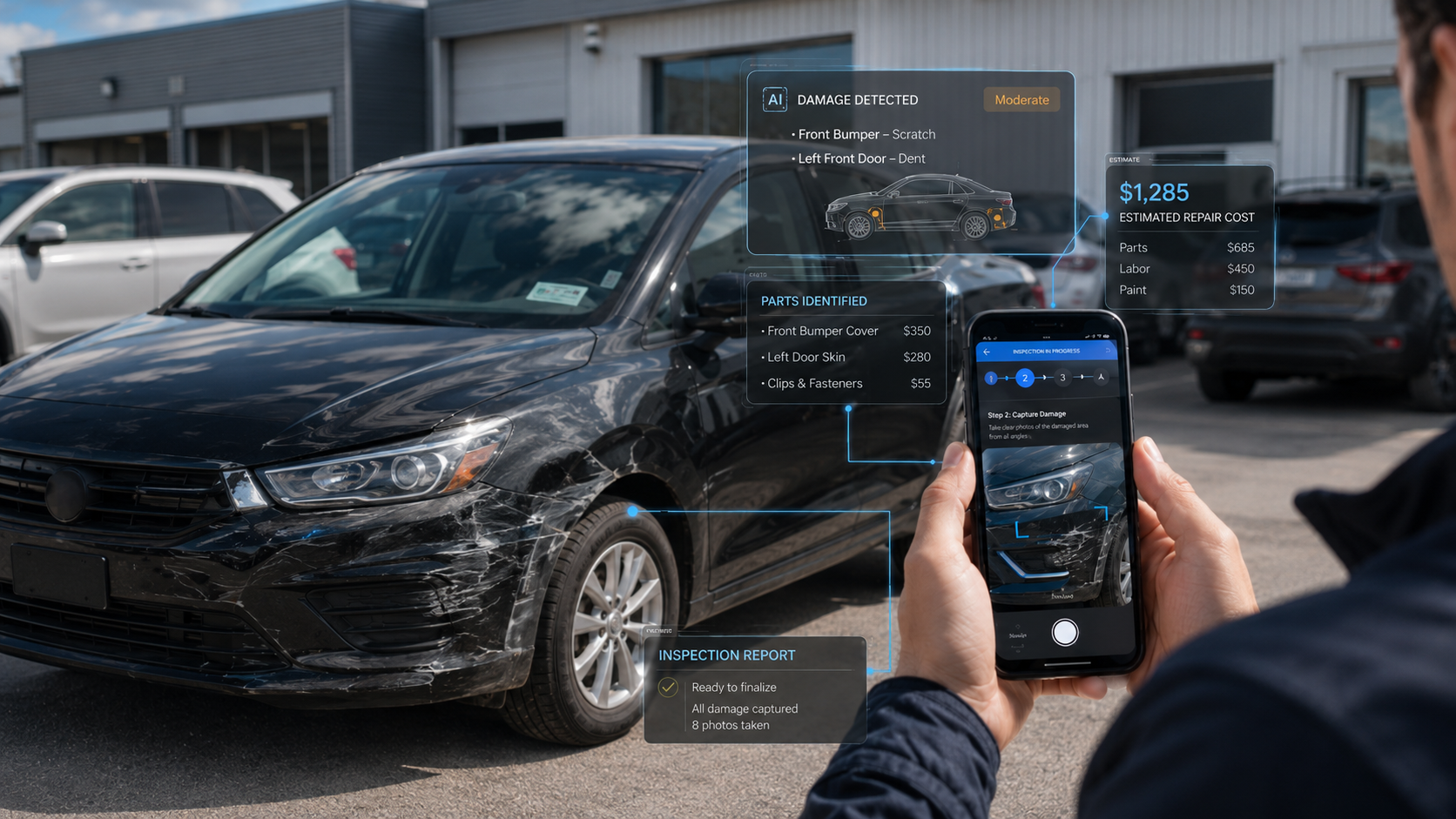
The product’s appeal is almost aggressively simple. A customer sends a link to someone with a smartphone. The software guides that person through photographing the entire vehicle, then compares the images with Self Inspection’s dataset of damaged cars. The result is an estimate of damage severity, repair costs and required parts, presented in a detailed inspection report.
The system can also draw information from a vehicle’s OBD2 computer. But the central idea does not require a specialist machine or a dedicated inspection bay. It assumes that the most widely available piece of automotive technology is already in people’s pockets.
That matters because vehicle condition influences rental operations, financing, auctions, marketplaces and decisions made at the end of a lease. Sandberg described the underlying problem as fragmented data around an area that touches billions of dollars in automotive decisions each year. Her stated ambition is for Self Inspection to become a system of record for vehicle condition.
The less theatrical side of AI
Self Inspection is entering a busy field. Toma and Flai are applying voice agents to dealership communication, BidBus is working on competitive bidding for privately owned cars, and UVeye has taken a more infrastructure-focused approach to inspections. Self Inspection’s distinction, according to the source material, is not spectacle but reach: it lowers the hardware barrier.
The company says its platform has helped customers reduce costs by more than $80 million and save over 300,000 operational hours. Those figures are company-reported, but they point to the practical question behind the funding: whether AI becomes valuable not when it looks futuristic, but when it removes small, expensive frictions from enormous industries.
The new capital will support additional products, expansion among enterprise customers and a move into Europe. The future of vehicle inspection may not arrive as a robot rolling around a showroom. It may arrive as a link in a text message – and a camera everyone already owns.
Source: TechCrunch Startups
ABOUT THE AUTHOR
Julia Upiterskaya
Founder of JULS and REVELATIONS
Julia Upiterskaya is a Dubai-based communications entrepreneur, founder of JULS and REVELATIONS, and an international technology moderator and speaker. With more than 10 years of experience across media, communications and events, she has worked with over 100 companies across emerging technology and innovation. Her current focus spans artificial intelligence, wellness and the technologies reshaping how people live, work and build businesses. Through JULS and REVELATIONS, Julia works at the intersection of strategic communications, founder positioning, technology, culture and global communities.