Morocco’s Tower Reaches for Tomorrow
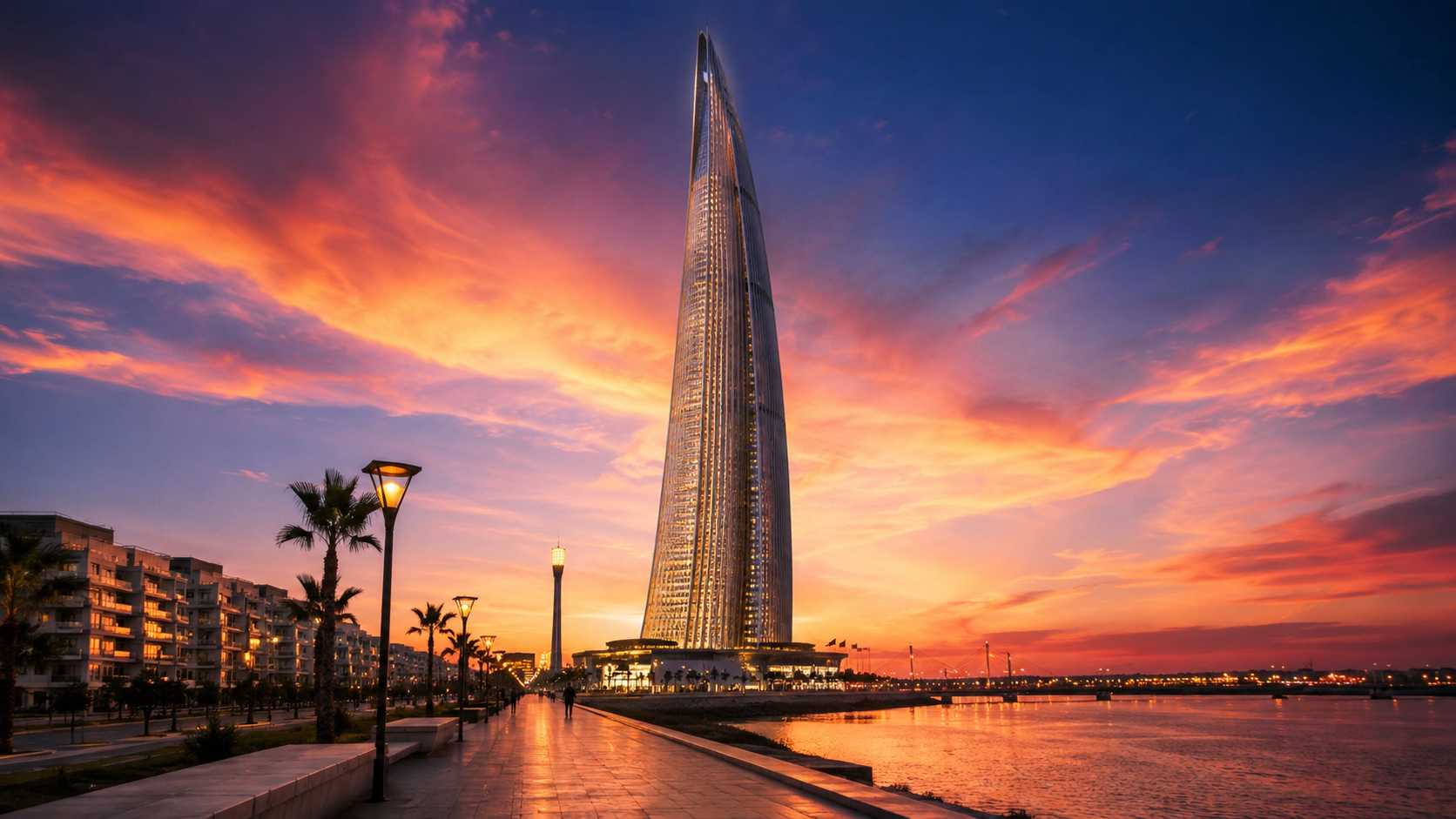
Morocco's skyline has been forever altered with the unveiling of the Mohammed VI Tower, designed by Rafael de La‑Hoz and Hakim Benjelloun. At 250 meters, it's the tallest structure in the nation, sparking conversations about its sci-fi aesthetics.
THE REVELATION
A landmark can change more than a skyline when it becomes evidence of what a country wants to be seen building. The Mohammed VI Tower places a distinctly futuristic object inside Rabat's existing urban and cultural context, creating a visible negotiation between continuity and ambition. Its significance is therefore not simply height. Architecture can function as a form of national storytelling, making technological confidence physical and public. The challenge is whether such landmarks remain isolated symbols or help reshape the city around them. The most convincing visions of the future do not erase what came before. They give the past a new structure to speak against.
In the heart of Rabat, where tradition meets modernity, the newly unveiled Mohammed VI Tower stands tall at 250 meters, redefining Morocco's architectural aspirations. Designed by Rafael de La‑Hoz and Hakim Benjelloun, this soaring structure has captured the imagination of many, with its 'proper sci-fi' appearance sparking debates about its role in the city’s evolving narrative.
While some see it merely as a monument to engineering prowess, the real intrigue lies in the cultural shift it signifies. The tower is not just the tallest building in Morocco; it represents a bold statement of ambition, aligning the nation with a future where boundaries of design and function are continually pushed.
This architectural marvel is more than steel and glass; it's a catalyst for change. As its silhouette graces the skyline, it challenges the surrounding urban landscape to reconsider its relationship with the past and the future. The tower is a call to action, urging the city to embrace innovation while honoring its rich heritage.
Looking ahead, the Mohammed VI Tower is poised to become a central stage for Morocco's growing influence on the global stage. It not only alters the skyline but also invites a reevaluation of identity and progress, signaling a future where architectural landmarks are as much about cultural dialogue as they are about height.
As day turns to night, the tower becomes a luminous beacon, a guiding light for a nation stepping confidently into tomorrow. It is a reminder that while the future is often imagined, it must also be built.
ABOUT THE AUTHOR
Julia Upiterskaya
Founder of JULS and REVELATIONS
Julia Upiterskaya is a Dubai-based communications entrepreneur, founder of JULS and REVELATIONS, and an international technology moderator and speaker. With more than 10 years of experience across media, communications and events, she has worked with over 100 companies across emerging technology and innovation. Her current focus spans artificial intelligence, wellness and the technologies reshaping how people live, work and build businesses. Through JULS and REVELATIONS, Julia works at the intersection of strategic communications, founder positioning, technology, culture and global communities.