Embodied AI Has Left the Demo Stage. AGIBOT Wants It on the Production Line
AGIBOT used WAIC 2026 to present four embodied AI products and industrial deployments designed to show that robots can operate inside real production and service workflows - not merely perform impressive demonstrations.
THE REVELATION
Embodied AI becomes commercially interesting when reliability replaces spectacle. A robot that can dance once is a demonstration; a robot that can return to a production line every shift, coordinate with existing equipment and recover from changing conditions is infrastructure. AGIBOT's factory deployments make that distinction visible. The meaningful metrics are not how human the machine looks, but uptime, integration time, throughput and repeatability. As robotics moves into ordinary operations, the market will likely reward systems that disappear into workflows rather than dominate the room. Physical intelligence succeeds when people stop watching the robot and start depending on it.
Robotics has spent years perfecting the dramatic entrance: a humanoid walks, a robot dances, a machine performs one immaculate task while cameras quietly hold their breath. AGIBOT is arguing that the real test begins after the applause. At WAIC 2026, the company unveiled four embodied AI products alongside factory deployments and public-service demonstrations designed to show whether robots can function as part of ordinary operations.
Founded in 2023, AGIBOT says it is developing both the foundation models and robotic embodiments needed to bring general intelligence into the physical world. Its “Three Intelligences in One” architecture combines locomotion, interaction and manipulation. The company’s portfolio spans humanoids, quadrupeds, dexterous systems and commercial cleaning solutions, and AGIBOT said it produced its 15,000th robot last month.
Four products, four bets on usefulness
The A3 Ultra is a full-size humanoid aimed at public-facing, commercial and service environments. It stands 1.74 metres tall, weighs 60 kilograms, has 51 active degrees of freedom and can carry up to 5 kilograms per arm. Its sensors include 3D lidar, RGB-D, fisheye and binocular cameras, while GPS, RTK and UWB support navigation. AGIBOT also lists direct charging, battery replacement and autonomous charging – less cinematic than a dance, but far more relevant to a long service shift.
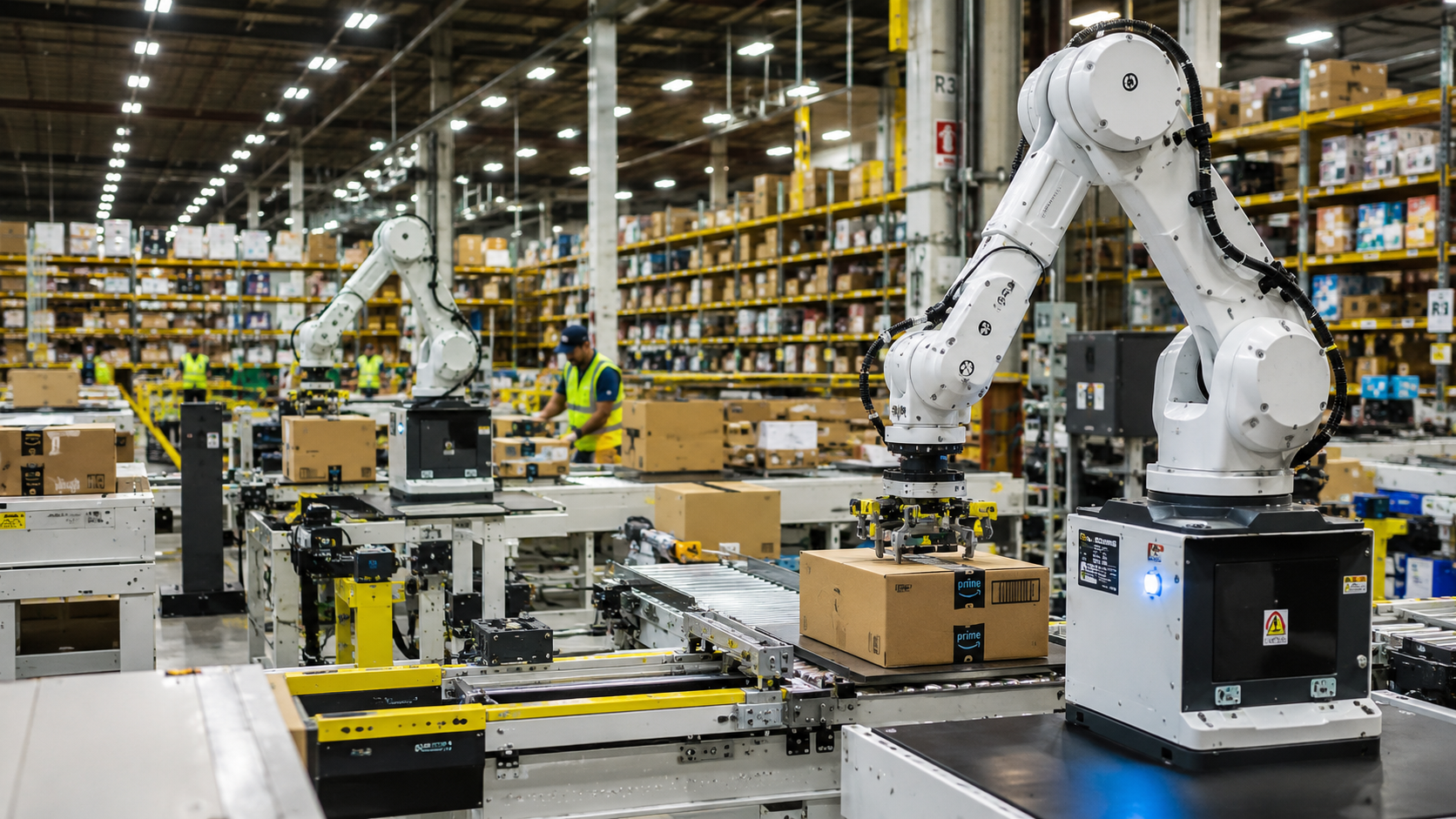
The G2 Max takes a more industrial route. It is a heavy-payload, force-controlled task robot designed for material handling, palletizing and related operations. Adjustable height, omnidirectional wheels and force-controlled arms are intended to let it work alongside existing factory equipment rather than demand an entirely new production universe.
The OmniHand 3 Ultra-M focuses on the smallest – and arguably most difficult – layer of physical work: contact-rich manipulation. Its direct-drive dexterous hand has 20 active degrees of freedom, weighs 630 grams and supports a whole-hand load of up to 5 kilograms. Vision-based tactile sensors in the fingertips and palm help detect contact, force and object position.
The fourth product, X2 EDU, is a modular humanoid platform for education, competitions and scientific research. With open motion-control and hardware interfaces, it allows developers to add end effectors, sensors and computing modules for different teaching and research needs.
The factory is the harder stage
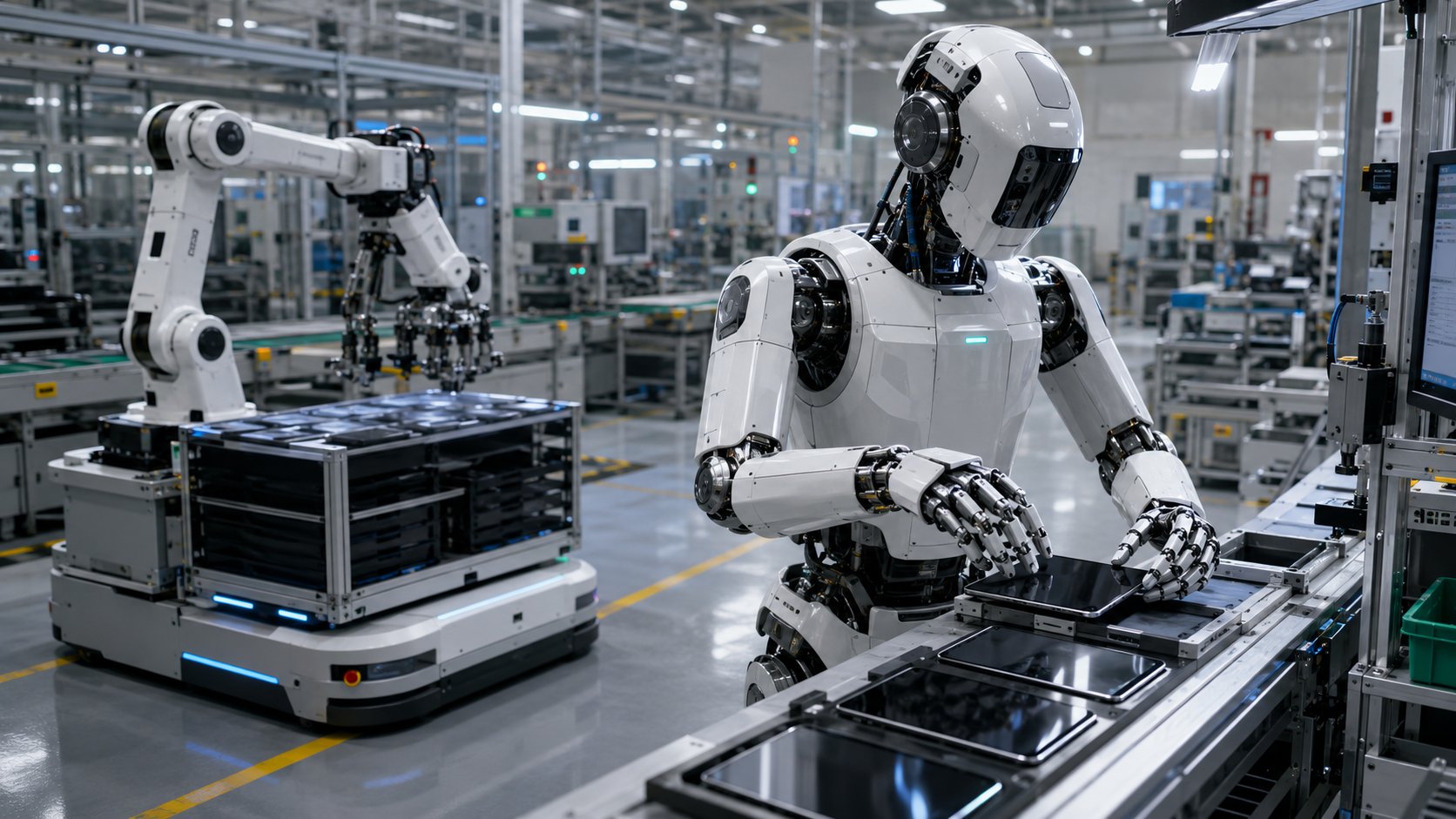
AGIBOT’s strongest argument was not inside the booth. At a Longcheer factory in Nanchang, G2 robots were integrated into a tablet quality-inspection line. The workflow covers material collection, precision placement, equipment interfacing and the return of finished products. AGIBOT said the integration took 36 hours; the system inspected about 3,000 units per shift across more than 64 hours of cumulative continuous operation, with downtime loss below 4%.
Those figures are company claims, not an independent verdict. But they point to the metric that matters: whether a robot can preserve production rhythms, handle changing conditions and coordinate with the machinery around it. AGIBOT says its deployments with Longcheer Technology, PIA Automation and other partners cover loading, unloading, chip handling and material movement – workflows with little glamour and plenty of consequences when they fail.
More than 30 AGIBOT robots also operated across WAIC venues, offering visitor guidance, information services and demonstrations. Projects with Sichuan Cultural Tourism and Guangzhou Railway extended the picture into tours, route guidance, interaction and on-site assistance. Busy public spaces are a practical stress test: visitors move unpredictably, conditions change and consistent performance matters more than a perfect isolated motion.
The shift AGIBOT is presenting is simple to describe and difficult to achieve. Embodied AI becomes commercially meaningful when it stops looking like a performance and starts behaving like infrastructure. The future of robotics may still include dancing and table tennis. It will be decided, however, by the less glamorous question waiting afterward: can the machine come back tomorrow and do the job again?
Source: The Robot Report
ABOUT THE AUTHOR
Julia Upiterskaya
Founder of JULS and REVELATIONS
Julia Upiterskaya is a Dubai-based communications entrepreneur, founder of JULS and REVELATIONS, and an international technology moderator and speaker. With more than 10 years of experience across media, communications and events, she has worked with over 100 companies across emerging technology and innovation. Her current focus spans artificial intelligence, wellness and the technologies reshaping how people live, work and build businesses. Through JULS and REVELATIONS, Julia works at the intersection of strategic communications, founder positioning, technology, culture and global communities.