The Robot That Matters Is Not the Flashiest One – It Is the One That Fits the Workflow
Boston Dynamics' Atlas is moving from public demonstration toward a stated factory roadmap. Its real test will be less about human-like movement than contact, safety, integration and repeatable performance.
THE REVELATION
Factories were built around human workers long before humanoid robots became viable. That may be their greatest commercial opportunity - and their hardest technical test. Atlas is not just competing with other robots. It is competing with the cost of redesigning production lines, managing unpredictable conditions and adapting existing infrastructure. A human shape only matters if it reduces those burdens without introducing new ones. The real breakthrough will come when adapting the robot becomes easier than adapting the factory.
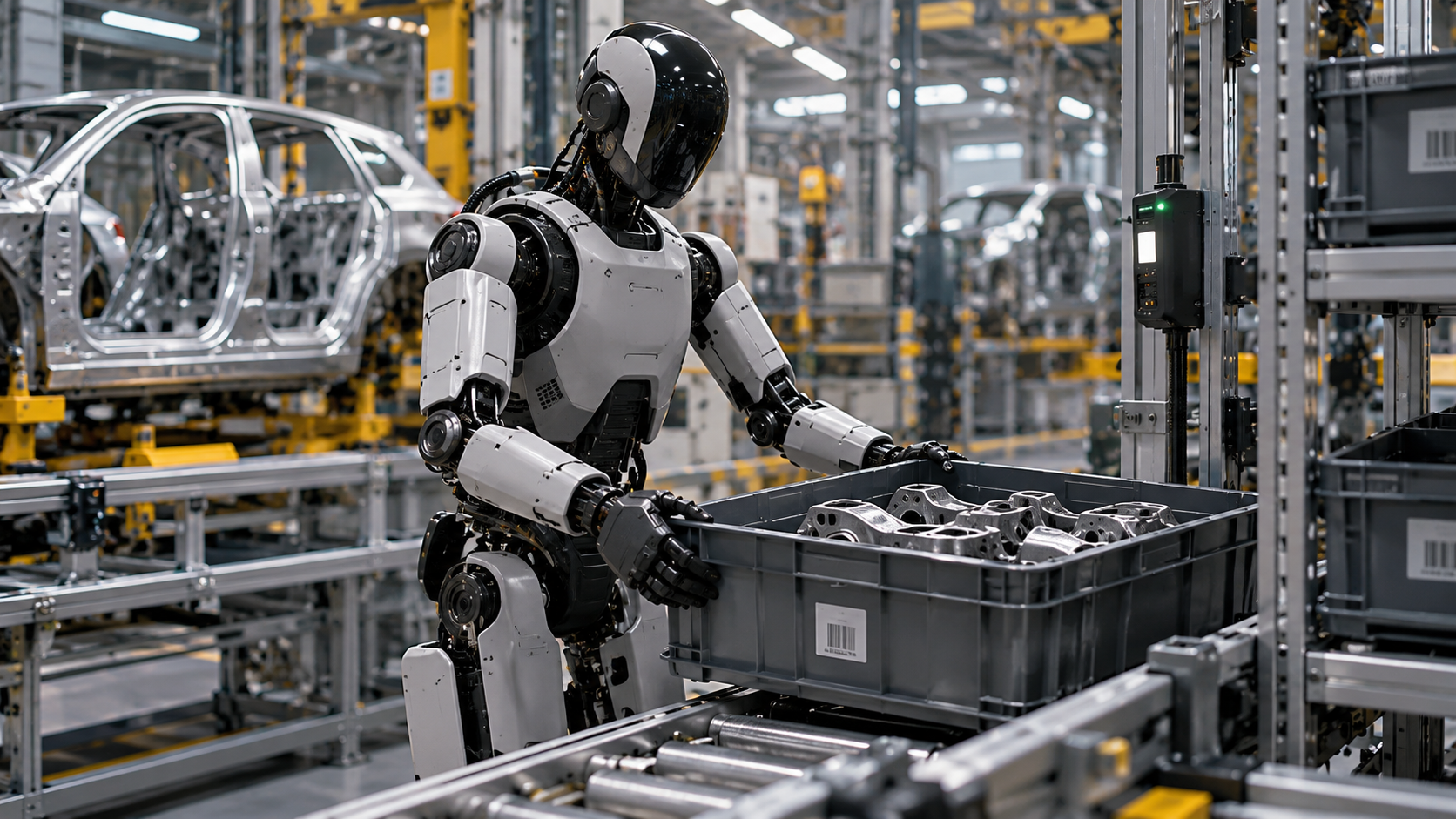
A robot can look impressively human and still be a very expensive way to move a box. The industrial question is less cinematic: can it repeat a task, manage contact with real parts and fit into a workflow that was not designed around its personality? Boston Dynamics' Atlas is now entering that less glamorous – and more consequential – test.
Boston Dynamics describes Atlas as an industrial humanoid robot for enterprise material handling. Its listed applications include barcode scanning, workflow integration, autonomous operation and deployment in existing workspaces. The company publicly demonstrated the next-generation robot at CES 2026 on January 5, placing Atlas in a growing contest to turn humanoid machines from polished demonstrations into tools for industrial and other real-world tasks.
The factory is not impressed by choreography
Manufacturing exposes the difference between movement and useful intelligence. NIST assesses robotic assembly through tasks such as alignment, insertion, electrical connection, fastening, threading and gear meshing. These are not simply questions of reaching the right coordinates. Small errors accumulate across parts, fixtures, robot links and end effectors, while strict position control can be insufficient when clearances are tight.
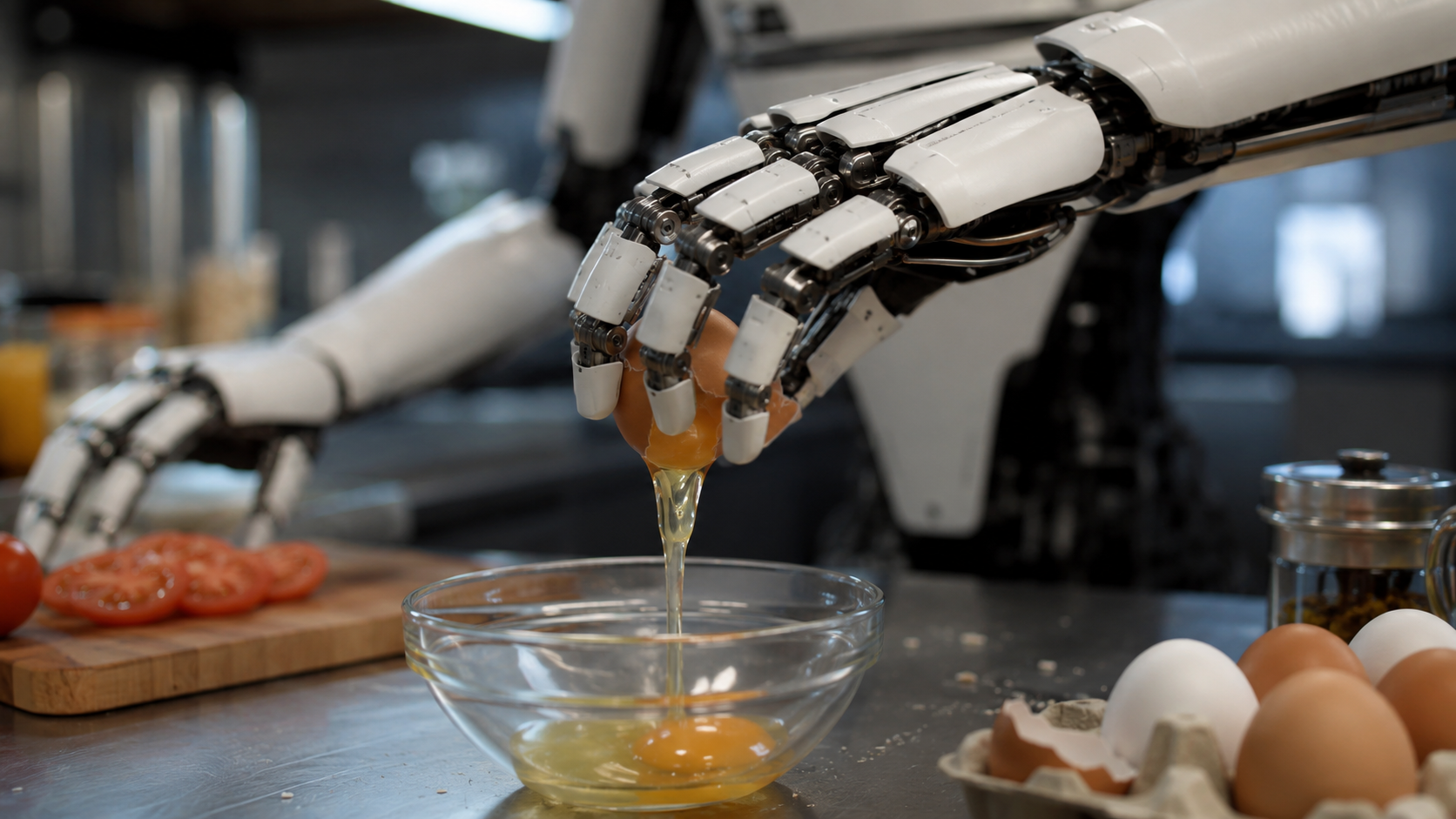
That is why force sensing, compliance, capable end effectors and reconfigurability matter. In contact-heavy work, compliant control uses measured forces to adjust position and velocity. NIST also notes that bandwidth limits and unreliable performance have slowed adoption of force-controlled assembly. In other words, the hard part is not making a machine move like a person. It is teaching the machine what to do when the part, tool or fixture refuses to behave politely.
Specifications are promises, not production results
Atlas' published platform includes 56 degrees of freedom, a four-hour battery life, a 50-kilogram instantaneous payload and a 30-kilogram sustained payload. Boston Dynamics also lists tactile sensing, a 360-degree camera view, IP67 protection, modular field-replaceable components, human detection and fenceless guarding. The specification sheet adds autonomous battery swapping in three minutes and barcode/RFID workflow integrations.
Those details show what the system is designed to support. They do not, by themselves, prove reliability, payback or unrestricted performance across factory conditions. The distinction matters because NIST says automated assembly has often depended on substantial fixturing and tooling – a pattern that can limit flexibility and raise investment. A humanoid form may help a robot enter spaces built for people, but it does not automatically make the system adaptable or economical.
The roadmap is where the story becomes real
Hyundai Motor Group says Atlas is planned for deployment at Metaplant America in Savannah, Georgia, beginning in 2028, initially on processes with demonstrated safety and quality benefits, including parts sequencing. The company says applications are expected to extend to component assembly by 2030, subject to performance validation. Hyundai presents this as a step toward commercialization and human-robot collaboration; those are corporate positions, not independent confirmation that the system has already achieved broad industrial deployment.
That qualification is the entire plot. The future of industrial robotics will not be decided by the machine with the most photogenic walk. It will be decided by the system that can perceive uncertainty, handle physical contact, work safely and keep delivering value after the launch video ends. Atlas may become that system. For now, its most important feature is not its human shape, but the factory floor waiting to judge it.
Sources: Boston Dynamics — Atlas product page; Hyundai Motor Group — CES 2026 Atlas announcement; NIST — Assembly Performance Metrics and Test Methods; NISTIR 7901 — Best Practices and Performance Metrics Using Force Control for Robotic Assembly; NIST — Performance Assessment Framework for Robotic Systems; Boston Dynamics — Atlas specifications sheet; Hyundai Motor Group — Atlas deployment plans; Associated Press — Hyundai and Boston Dynamics unveil Atlas at CES